
Niagara County City Directory Holdings
The historical directory shelf is uneven, but it is unusually deep for Lockport and useful for countywide research. The New York State Library records both city and county runs, while Lockport Public Library, the County Historian, and local repositories add film, print, newspapers, and staff guidance. Start by identifying the place and approximate year. A Lockport title and a county title can cover different places, sections, publishers, and kinds of listings even when their dates are close.
| Collection | Years | Where Held | Access |
|---|---|---|---|
| Lockport city directories | 1856–57; 1859–78; 1880–85; 1887–1949; 1952–55; 1957–78; 1980–82; 1984; 1986–91 | NYS Library and Lockport Library | Film, print, local-history room, and scanners |
| Niagara County directories | 1869; 1878/79; 1880/81; 1887; 1891; 1895–96; 1905; 1908; 1911; 1914; 1919; 1923; 1927; 1929–30; 1933; 1935; 1937; 1939; 1942 | NYS Library and local collections | Holdings page or finding aid; confirm the repository copy |
| Lockport telephone books | 1945/46 and 1950/51 | NYS Library holdings | Confirm the specific volume before travel or a request |
| Historian directory references | From 1856 | Niagara County Historian | In-person or mediated research assistance |
The New York State Library city-directory holdings are the best starting point for the observed runs. They also make the gaps visible. Do not fill a missing year with a nearby edition, and do not assume every item has the same access conditions.
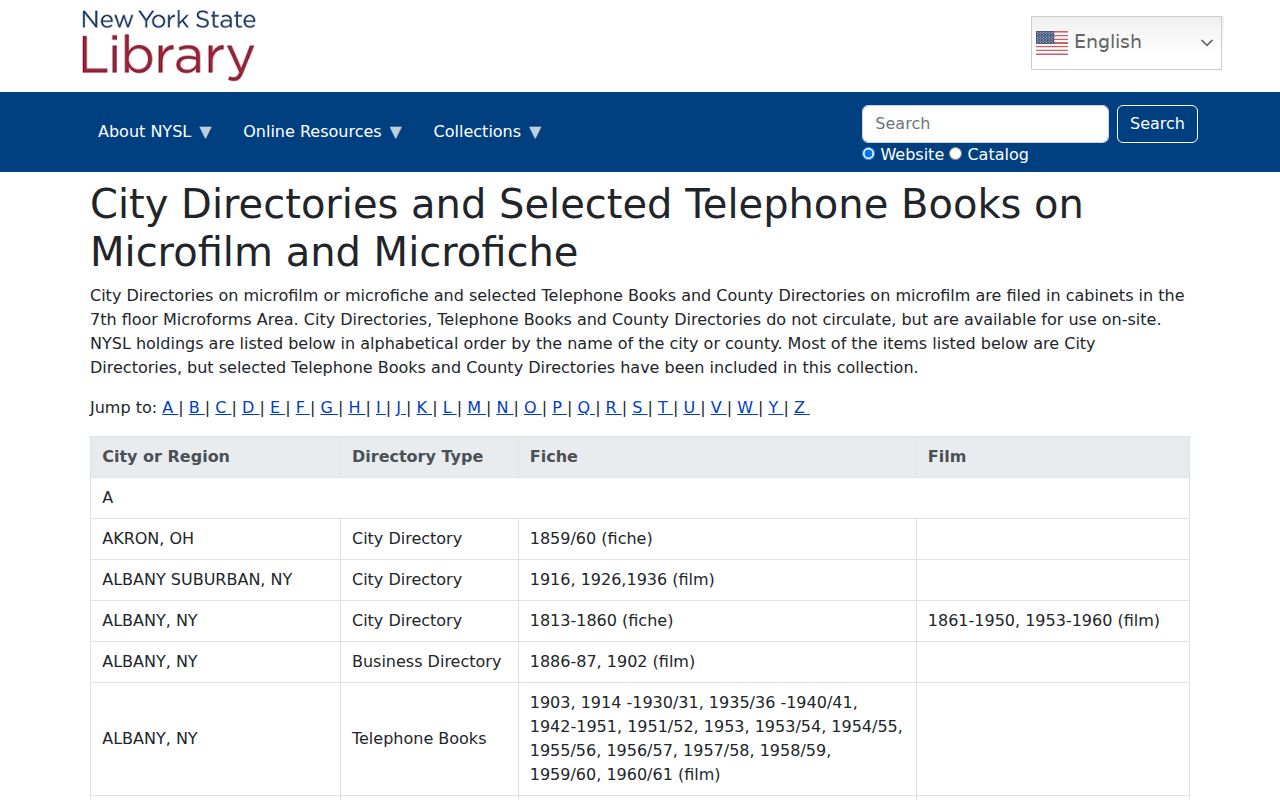
The holdings display helps separate a real run from a guess based on a publisher name or a general web result.
Niagara County Directory Runs
Lockport’s observed run begins with 1856-57, continues in long but broken stretches through the twentieth century, and resumes for 1952-55, 1957-78, 1980-82, 1984, and 1986-91. The countywide sequence is much more selective: 1869, 1878/79, 1880/81, 1887, 1891, 1895-96, 1905, 1908, 1911, 1914, 1919, 1923, 1927, 1929-30, 1933, 1935, 1937, 1939, and 1942. A city directory is therefore most useful as a known-year snapshot. It should not be read as a continuous annual register.
Lockport newspapers, the obituary index, federal and state census material, and yearbooks can help span a break between volumes. Lockport Public Library lists local newspapers, two microfilm scanners, printed directories, United States and New York State census microfilm, and an obituary index. The Lockport oral-history collection at New York Heritage adds local context for names and places that appear in a directory search.
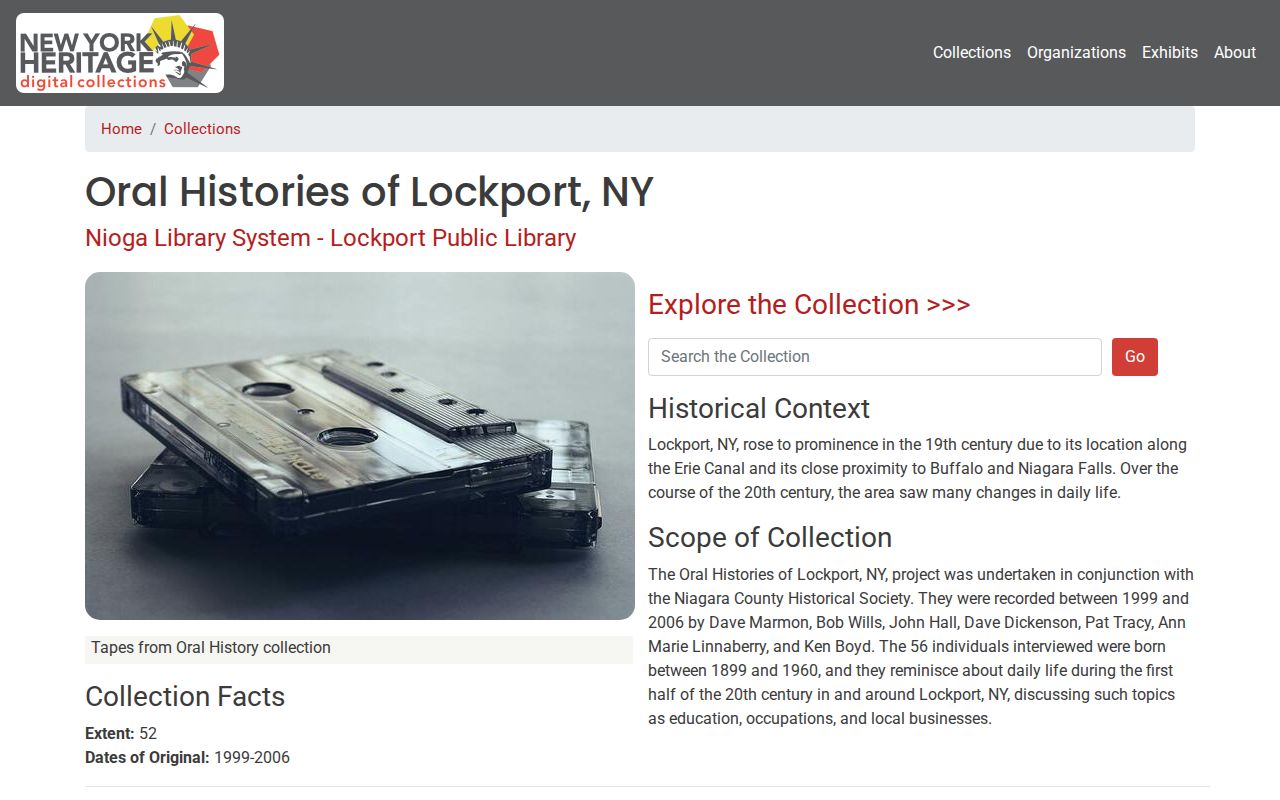
Oral-history material can explain a business district or neighborhood name, but it does not replace the date and wording in the directory volume itself.
Niagara County Directory Publishers
Title pages matter in Niagara County research. The early run includes Granger’s Lockport Directory for 1856-57, published by J.H. French of Syracuse. Boyd’s Lockport City Directory included a Niagara County business directory and appendix for 1866-67. The record then notes the Staats Lockport City Directory for 1868-69 and an 1868 Lockport volume with general, business, city-government, institution, society, historical-sketch, and post-office material.
Later titles changed shape again. Kirwin’s 1878 Lockport and county directory includes alphabetical, street, miscellaneous, advertiser, and town/village sections. The located run also includes an 1886-87 Niagara Falls and Suspension Bridge Directory by L.P. Waite and later Polk’s Niagara Falls directories. These are not interchangeable datasets. Before recording a result, note the exact title, year, place coverage, and section used.
The Polster photographs collection preserves Lockport scenes from the 1940s through the 1960s. It can help put a listed street or commercial name in period context.
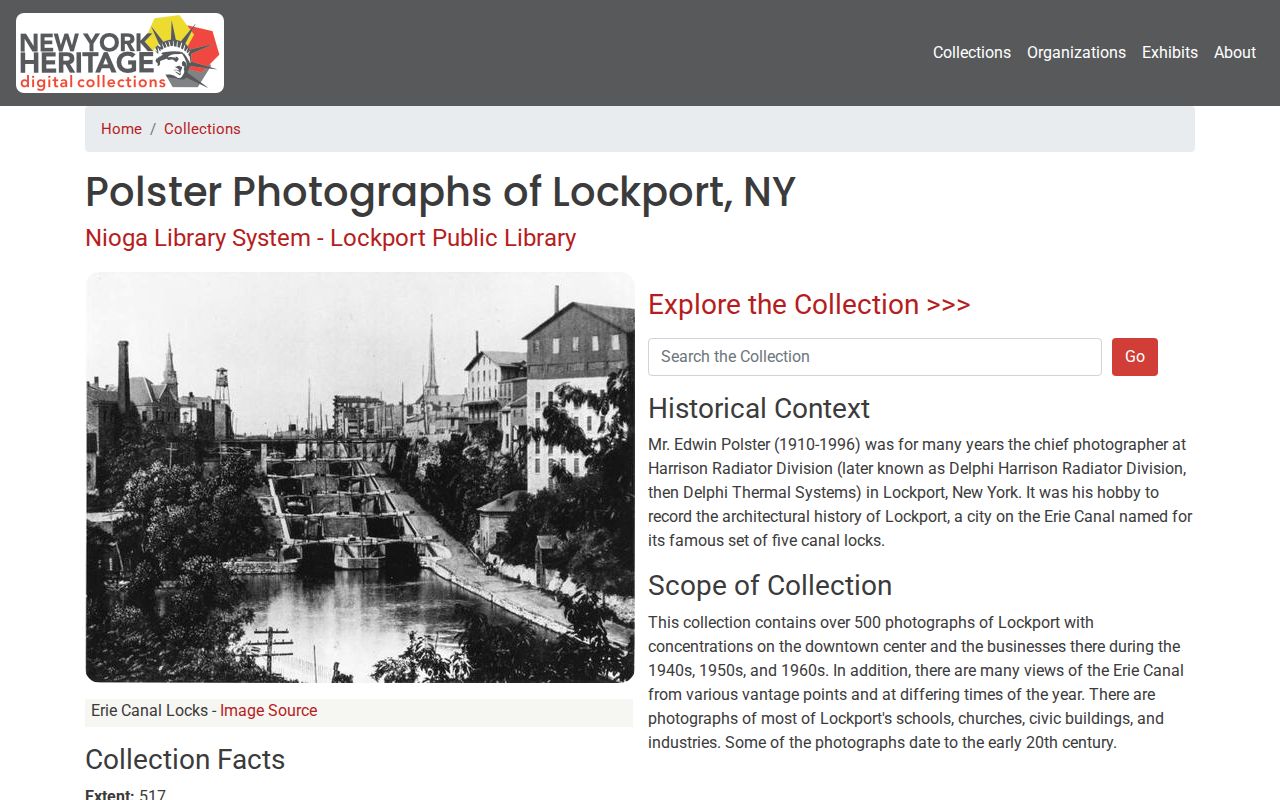
A photograph collection is supporting evidence only. The directory remains the source for its own printed name-and-address snapshot.
- 1856-57: Granger’s Lockport Directory, published by J.H. French of Syracuse.
- 1866-67: Boyd’s Lockport City Directory, with a Niagara County business directory and appendix.
- 1868-69: Staats Lockport City Directory, following the 1868 volume with broad civic and business sections.
- 1878: Kirwin’s Lockport and county directory, with alphabetical, street, miscellaneous, advertiser, and town/village sections.
- 1886-87: L.P. Waite’s Niagara Falls and Suspension Bridge Directory; later holdings include Polk’s Niagara Falls titles.
Reading Niagara County City Directory Lines
Do not invent a sample listing. A public repository scan showing a specific Niagara historical entry was not available in the inspected source set, so the volume must be opened before any field or abbreviation is treated as present. The directory pages can differ by publisher and year. Use the front matter, section labels, and the page image before transcribing a name or deciding what an abbreviation means.
| Name | Inspect the volume for the printed personal, household, business, or institutional name. |
|---|---|
| Address | Record an address only when the volume prints one, preserving the street spelling and number. |
| Role or relationship | Look for any household, business, or institutional relationship shown by that title and year. |
| Street section | Check whether the particular volume has a street section and whether the target address appears there. |
| Classification or advertising | Note a business classification or advertiser only when it is visibly connected to the entry or section. |
- Householder index
- An index arranged around household heads or named households when a particular directory provides one. Check the volume’s own arrangement before relying on that label.
- Abbreviation key
- The explanatory list, often in front matter or another labeled part of a volume, that defines its shorthand. Photograph or transcribe the key with the entry.
A separate, publicly cataloged Niagara criss-cross or reverse directory run was not confirmed. When an address is the starting point, use a conventional street section if that volume has one, then ask the library or Historian whether a reverse directory, telephone book, Sanborn map, or address index covers the year.
Niagara County Directory Rooms
Lockport Public Library’s local-history service is a practical first stop for printed and filmed material. Its collection page names city directories, local newspapers, yearbooks, census microfilm, the obituary index, and two microfilm scanners. Library access conditions also apply to Ancestry Library Edition. A request that includes a complete name, place, and date range gives staff a usable starting point without asking them to infer a whole family history from a surname alone.
The Lockport Public Library local-history page shows the collection categories and research setting. Bring or retain the citation for each photographed page, including title, year, page, and repository.
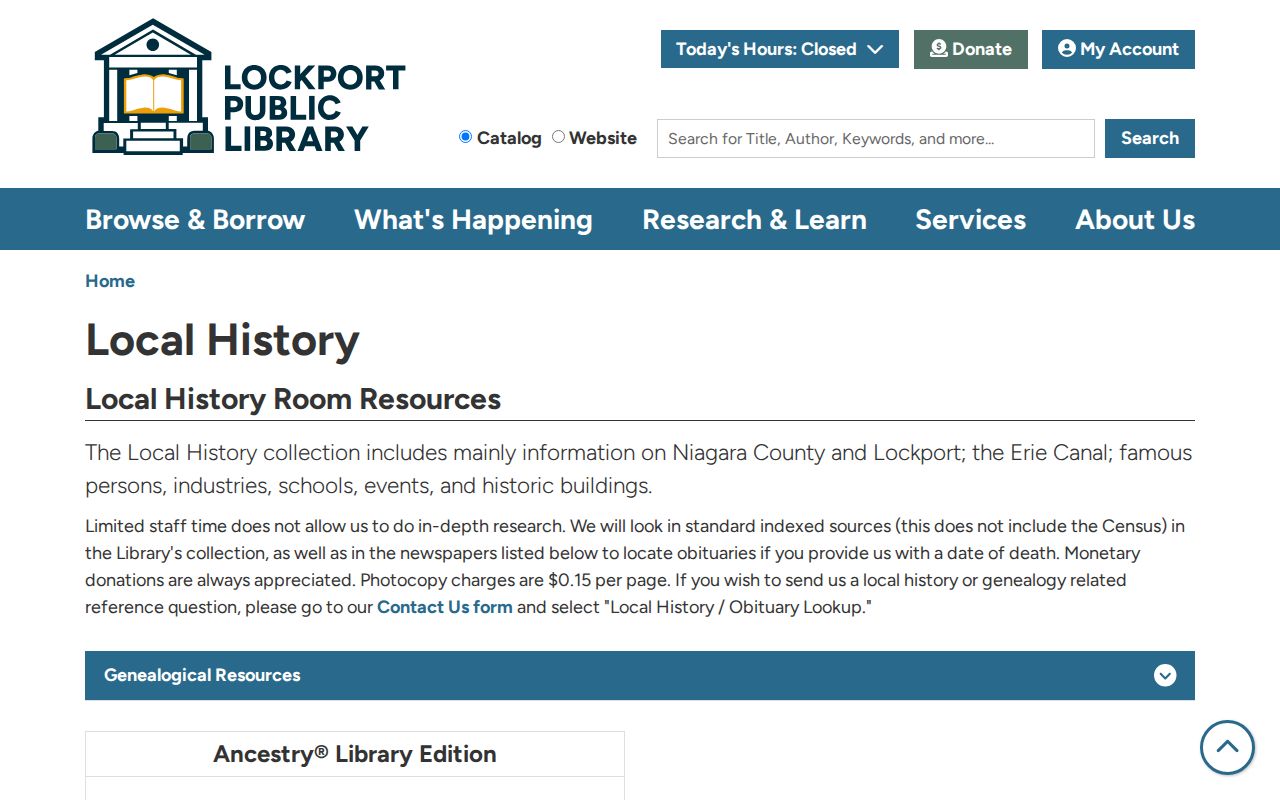
The library’s combined directory, newspaper, census, and obituary holdings make it possible to test a single printed listing against more than one historical source.
Tracing Niagara County City Directories
For family history, build a dated sequence rather than a profile. Start with the first confirmed appearance, then move forward and backward through the actual available years. The County Historian describes obituaries from roughly the 1840s, census records from 1850, naturalizations from 1836, church records, directories from 1856, newspapers, family files, maps, and veteran files. Those collections can clarify a move, a death, a change in name spelling, or a different municipality.
- Choose the closest available directory year and record its exact title, place coverage, and page.
- Search the same name in the next available year, preserving spelling variants instead of silently merging similar names.
- Compare the address or role shown in each confirmed entry, while marking years where no volume is held.
- Pair the directory sequence with the closest federal or New York State census available through Lockport Library or another authorized repository.
- Use an obituary, church, deed, probate, or family file as a separate dated source before concluding why an entry appeared or disappeared.
A name disappearing from a directory can reflect a move, death, omission, changed coverage, or a publisher’s different method. It cannot by itself settle which explanation is true. Modern parcel work is a separate task; the Niagara County street directory handles the current address-keyed record trail.
Niagara County Directory Requests
Lewiston research has a distinct local route. The Frieda C. Bourgon Local History Room at Lewiston Public Library holds histories, genealogies, maps, newspapers, and archives. Its People of Lewiston database covers Lewiston census-era family material through 1940, while the obituary resource reaches back to 1854 for various years. It is not a countywide current register, but it can add a place-specific record beside a Lockport or county directory.
The Lewiston Public Library genealogy page asks for complete names, dates, and locations for email or mail lookup requests. Supplying those details helps staff match the correct local collection and date.
The Lewiston route is especially useful when a directory uses a county label but the family’s historical records belong to the Lewiston area.
Niagara County Directory Repositories
The County Historian is a central referral point when the exact series is not known. The office is in the Civil Defense Building at 139 Niagara Street in Lockport. Observed hours are Wednesday and Thursday, 8:30-2:30, and Friday, 8:30-1:30; the observed phone is 716-439-7324. Staff can help locate documents, access databases, and explain where records are held. Collection descriptions use approximate starting dates, so ask about the particular year and municipality rather than assuming complete coverage.
The Niagara County guide from the New York Genealogical and Biographical Society helps connect the Historian, local libraries, the Genealogical Society, FamilySearch, and related repositories.
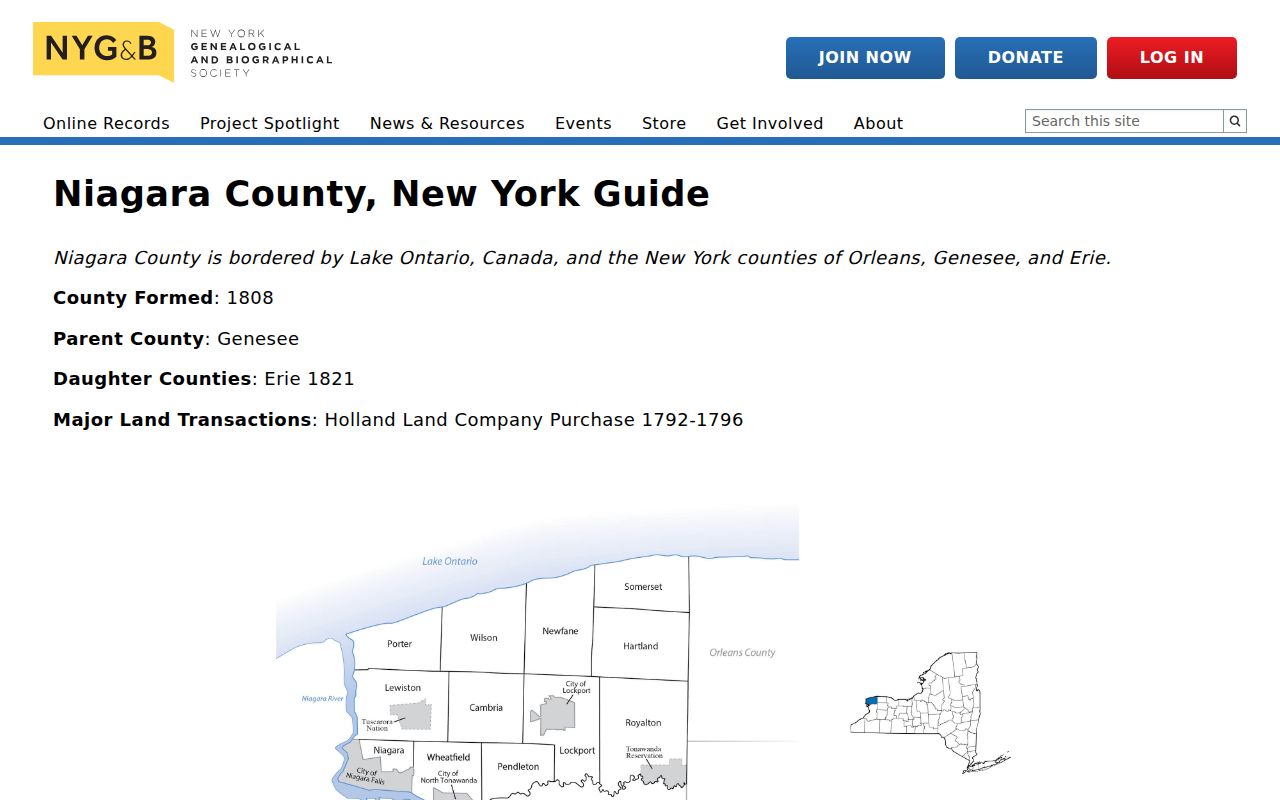
Using more than one repository is normal here because a directory, obituary, census, deed, and family file each answer a different dated question.
The Niagara County Historian collection page lists the office’s directory, obituary, census, naturalization, church, newspaper, map, veteran, and family-file subjects.
The Historian’s directory reference begins in 1856, but the description does not guarantee every community or annual issue.
The FamilySearch Niagara County catalog identifies miscellaneous records, grantor-grantee indexes, microfilm, and digital-genealogy references that may bridge a directory finding to a land or family record.
Film availability can require an account or access through a FamilySearch Center, so a catalog result is not automatically an online image.
The Niagara County Genealogical Society is an all-volunteer organization founded in January 1979. It reports more than 2,000 books and resources, member access to a large digitized-record collection, and a Lockport location at 215 Niagara Street, second floor.
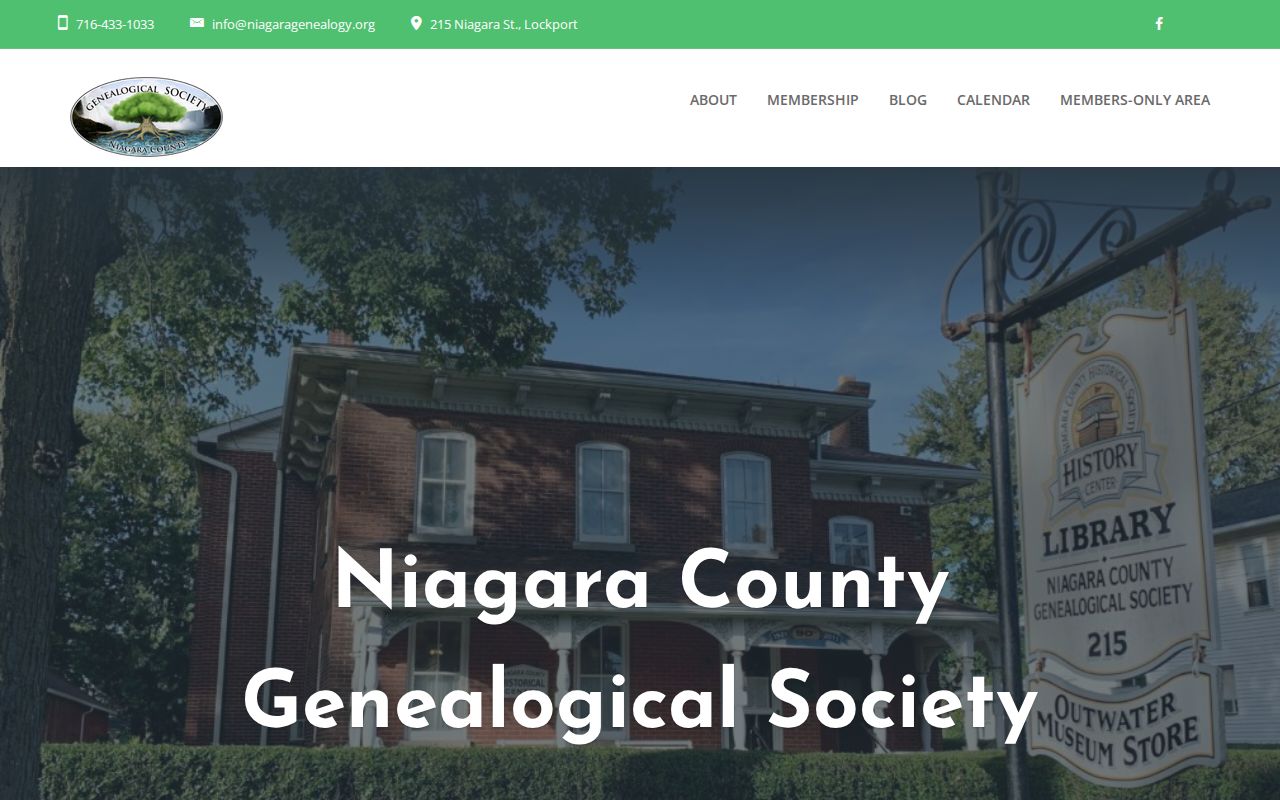
Society material can supply a useful next lead, but the original directory volume or named custodian remains the source to cite for a listed fact.
Niagara County Directory Gaps
Directory evidence has two limits that should travel with every note: it reflects the publisher’s collection and print date, and inclusion does not prove legal residence or present status. County formation, municipal record boundaries, title changes, and missing years add more reasons to preserve the original wording and date. The 2020 county agenda described planned conversion of 1918-1940 grantor-grantee and deed volumes to electronic form with archival microfilm, but it does not establish that every historic item is online now.
The Niagara History Center at 215 Niagara Street in Lockport provides research assistance and copies for an added charge. Its observed hours are Wednesday through Saturday, 9-5, with Sunday and holiday closures as shown. The preserved Washington Hunt Law Office was built in 1835 and moved there in 1955, a reminder that local history can connect a printed listing to a physical collection without turning history into a current-person claim.