
Niagara County Resident Lookup Records
A good result begins with a narrow question. Niagara County PROS-GAR is useful for an assessment owner, mailing line, parcel identifier, or sale reference. State court systems help locate public case information when the court and case type fit. The voter service is designed for an individual voter’s election information, and older vital indexes point to a custodian rather than supplying a complete record. Each source answers a different part of the question.
| Record | What It Confirms | Where | Access |
|---|---|---|---|
| PROS parcel card | Assessment owner, mailing line, SBL, assessment and sale references | Niagara County PROS-GAR | Public web search |
| Court index | Whether a public case can be located under a party or case identifier | WebCivil, WebCivil Local, NYSCEF, then the appropriate clerk | Online scope varies |
| Voter service | Registration, poll-site, or ballot-service information for the queried voter | New York State Voter Lookup | Individual service lookup |
| Vital index or genealogy route | An event lead, subject to waiting periods and eligibility | NYS Archives, DOH Genealogy, or local registrar | Index and copy rules differ |
| Historical collection | Older names, addresses, obituaries, yearbooks, and local context | Historian and local libraries | Repository or mediated access |
Start with a full name and a place when possible. If the known fact is an address, PROS can supply an owner-of-record lead. If the known fact is a court number, go to the court system first. If the goal is a past family connection, use a date and municipality to choose between a vital route, an obituary index, or a directory collection.
Match Names in Niagara County Records
Names alone are weak identifiers. Compare the surname, given-name form, middle initial, municipality, address, year, and any record number that the source displays. A maiden name, a shortened first name, and a misspelled surname can produce separate results. The county’s municipalities also matter: a Lockport mailing label may not identify whether the record belongs to the City of Lockport, Town of Lockport, or another municipal custodian. Do not merge two same-name entries merely because their county is the same.
The inspected PROS parcel card provides a useful inventory without claiming that it establishes occupancy. It can display the address, SBL and SWIS identifiers, owner and mailing fields, assessment year and values, land and improvement details, sale history, last-sale deed date and book/page reference, exemptions, special districts, map controls, and prior-owner information. Its owner and mailing fields are assessment data. They do not prove title, a current household, or physical presence at the parcel.
| Parcel-card field | How to use it carefully |
|---|---|
| Address, SBL, and SWIS | Keep these together to distinguish similarly named streets and parcels. |
| Owner and mailing address | Treat as an assessment contact line, not proof of residence or title. |
| Last-sale deed date and book/page | Use as a lead for a County Clerk document request. |
| Assessment, land, and improvement fields | Read as assessment attributes, not an inspection or identity record. |
Niagara County Resident Lookup Court Routes
Court research is divided by court and case type. WebCivil Supreme covers Civil Supreme Court information. WebCivil Local covers local civil courts. NYSCEF has a guest search for eligible e-filed matters. Its inspected search controls include a full case number, attorney file number or third-party index number, an alternate case number and year, and county, case-type, filing-start, and filing-end narrowing. Niagara County Court, city courts, town and village courts, Family Court, and Surrogate’s Court retain separate clerk routes. Select the court before treating a missing online result as meaningful.
The WebCivil Local search shows index, party, attorney or firm, judge, and calendar choices for local civil matters.
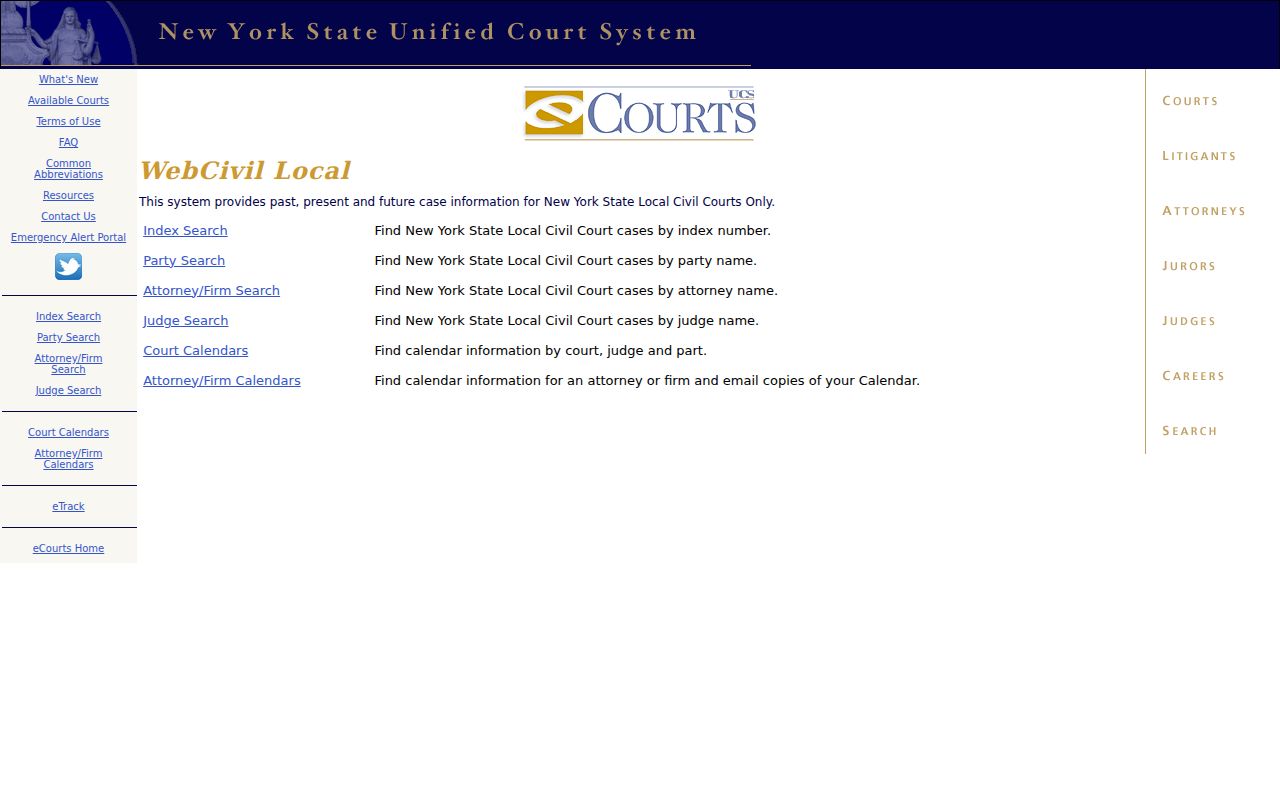
That form helps identify a route, but local-court availability still varies by court and case type.
For probate, wills, estates, and related matters, the Niagara County Surrogate’s Court is the appropriate local court route. The research places its office at 175 Hawley Street in Lockport and notes that early Niagara probate begins in 1821, with 1808 to 1821 material at Erie County.
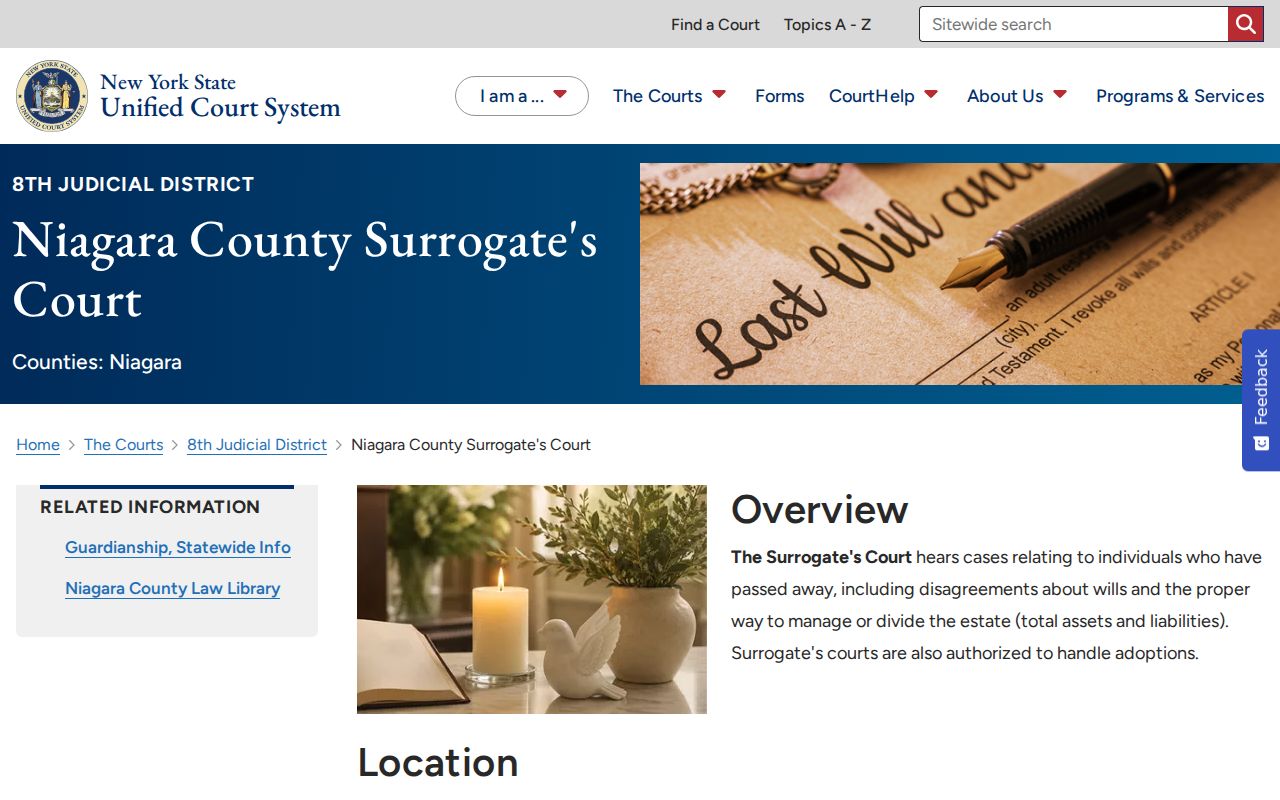
Probate research can identify an estate file, but a file request belongs with the court clerk and remains subject to court access rules.
The New York Unified Court System’s court-record access overview distinguishes online case information from a clerk-held file or certified record.
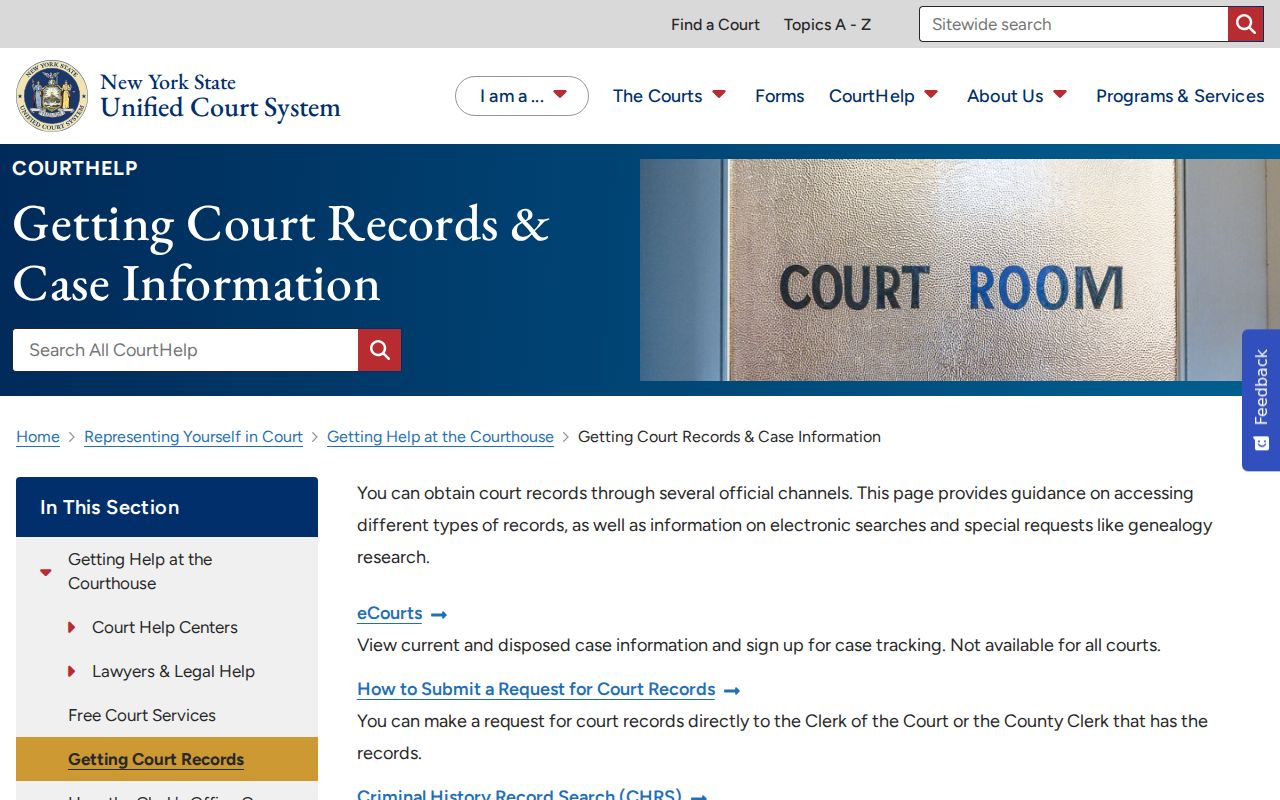
Sealed matters, youthful-offender matters, adoptions, some Family Court matters, recently entered cases, and some local civil matters may not appear online. The research did not retrieve a neutral populated Niagara docket, so no docket caption, status, or filing sequence is supplied here. Ask the clerk for the actual file with the court, index number or caption, document type, and date.
Verify a Niagara County Resident Lookup
Verification means checking whether independent records agree on the same person. Keep a note of the spelling used in each system and the date attached to the result. A current assessment record may contain a past sale reference. An old obituary or directory can be historically useful without proving a present address. The following sequence keeps the one-person question narrow and gives the custodian a workable request if a source needs a formal copy.
- Search PROS by owner in the displayed Last, First format, or use an address, street number and name without its suffix, SBL, or municipality. Save the parcel identifiers, not just the name.
- Compare the owner spelling and place with a court party search only when the court system fits the suspected matter. Record the court, case type, index number, and year where available.
- Use an eligible vital index or genealogy route to test an event date, spouse, parent, or municipality. Treat an index as a finding aid, not a full certificate.
- Request the underlying court, vital, or land document from its custodian when a formal record is needed. Give the office the identifiers already found and ask about copy type and access limits.
- Docket
- A court’s running list of events and filings in a case. It can help locate a file, but it is not the filed document or a certified disposition.
- Index versus image
- An index points to a record by fields such as a name, date, or number. An image is a view of the underlying document when the custodian makes one available.
- Certified copy
- A copy issued and certified by the responsible office. It has a different purpose and access process from an online index result.
Niagara County Resident Lookup Voter Rules
The state voter service is not a public street roster. Its visible fields are last name, first name, date of birth in MM/DD/YYYY format, county, and address, and it requires cookies and JavaScript. It is designed for poll-site, registration, and ballot-service information about the voter queried. A missing result can have several causes, including a changed address or list-maintenance process, so the Board of Elections is the local source for an explanation.
The Niagara County Board of Elections provides local election resources, registration information, maps, sample ballots, results, and where-to-vote links.
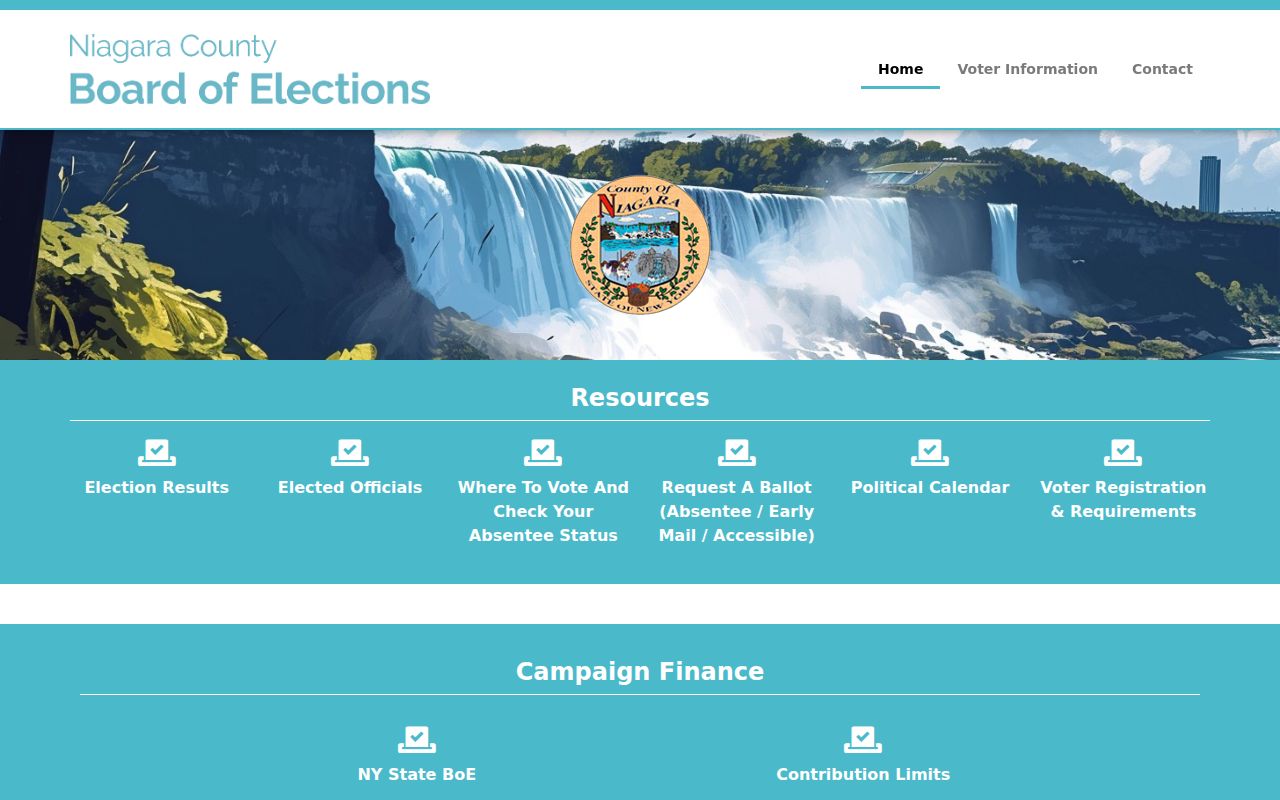
County election services are the proper follow-up for an individual registration or poll-service question.
The Board’s contact page identifies its Lockport office and commissioner contact lines.
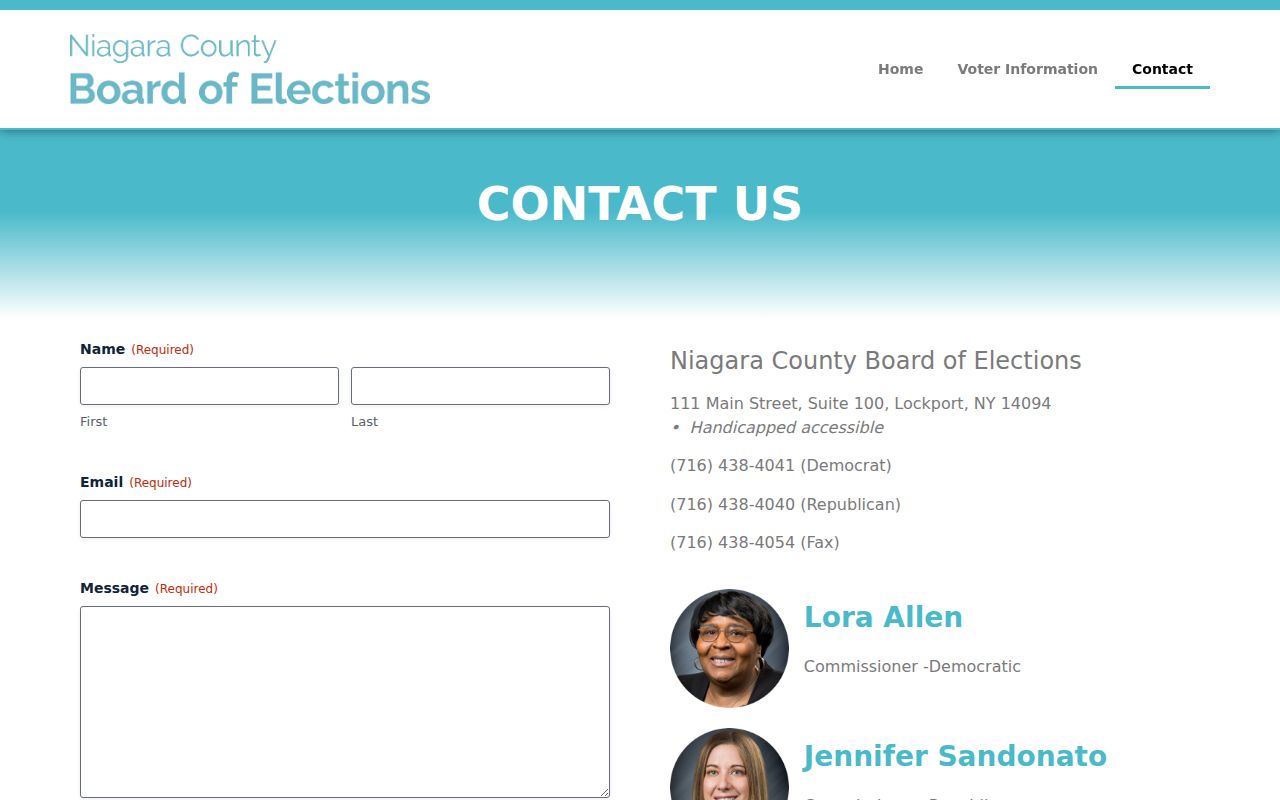
Use that office rather than inferring an individual’s status from aggregate affiliation figures or a stale result.
Requests for voter-registration data use the state Board of Elections FOIL process and require a statement that the use is for an elections purpose under Election Law §3-103(5).
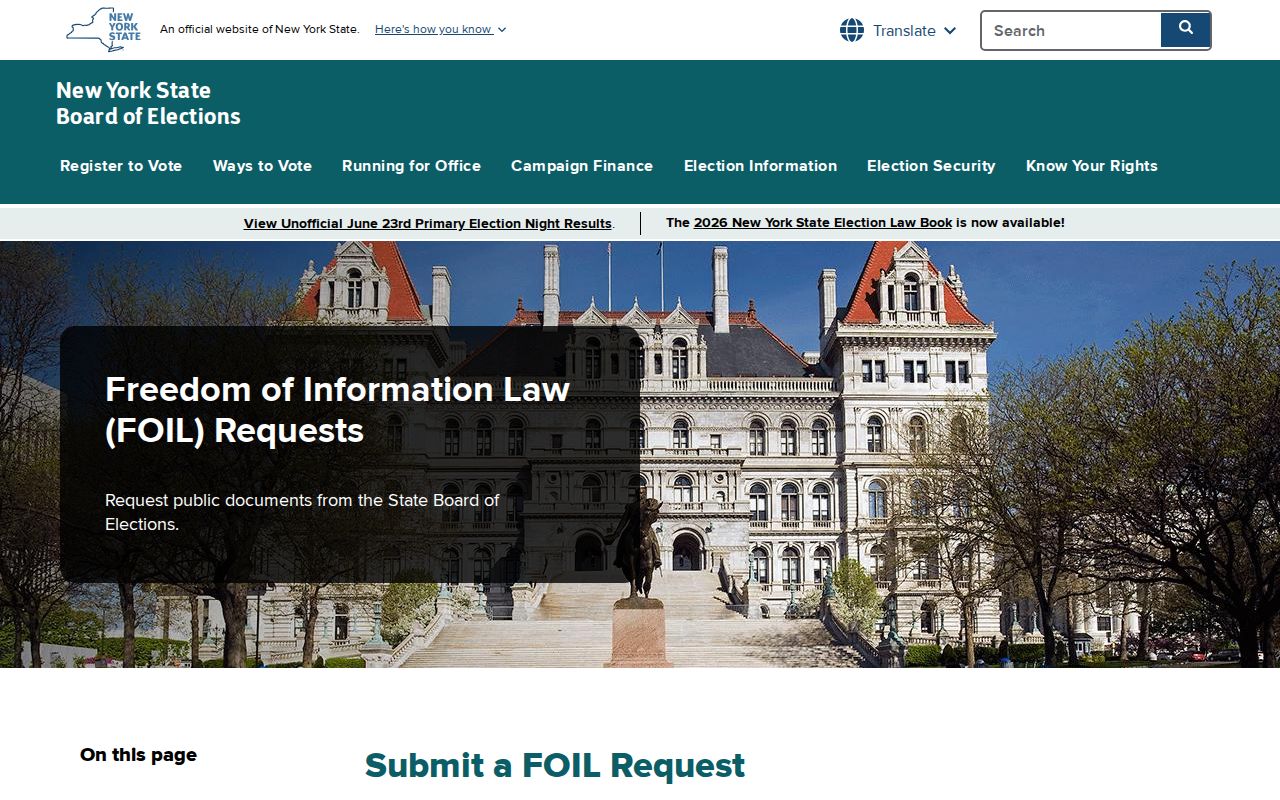
Confidential registrations are excluded, and a request should identify the actual record sought instead of asking an agency to create a new name list.
The New York voter lookup displays the individual-service search form.
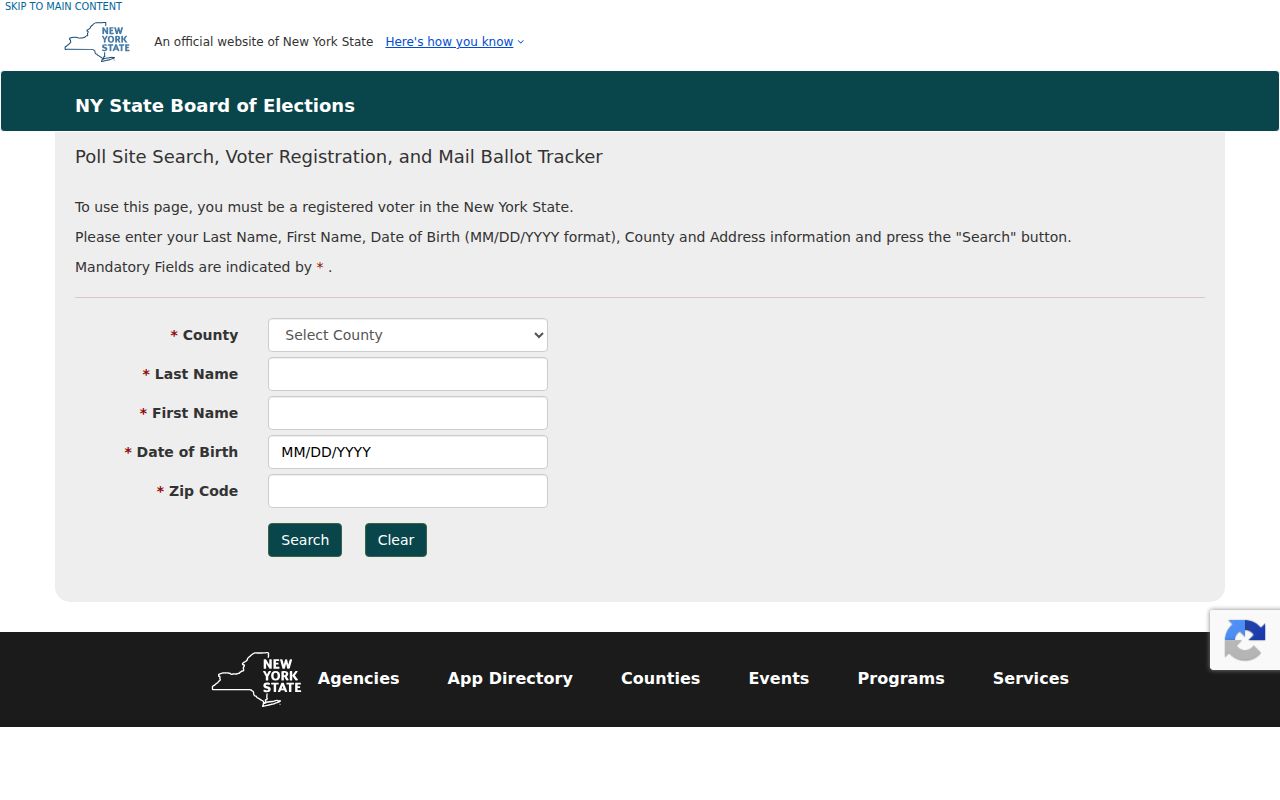
Results were not captured without submitting personal identifiers, so the research does not assume an unobserved result-field set.
Niagara County Resident Lookup Vital Routes
Vital records follow the place of the event. A city, town, or village registrar may be the faster route when the municipality is known. For eligible non-New York City genealogy requests, New York State Department of Health rules generally allow births after 75 years when the person is known deceased, deaths after 50 years, and marriages after 50 years when both spouses are known deceased. Direct-line exceptions can require proof of relationship and death facts. DOH warns that genealogy processing can take eight months or longer.
The New York State Archives guide explains historical birth, marriage, and death access routes and indexes.
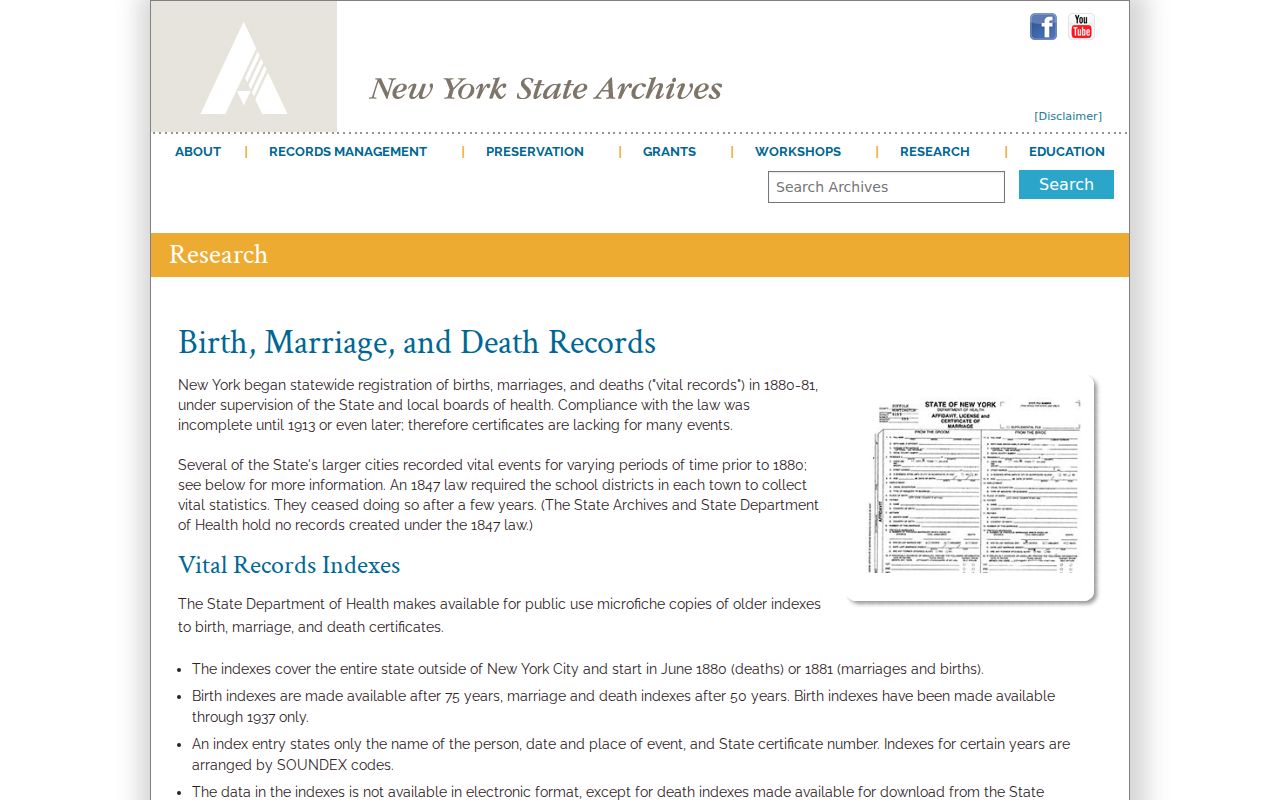
The research notes historical index coverage for births, marriages, and deaths, but an index remains a lead rather than a certified record.
The DOH genealogy service gives the current statewide application route, waiting periods, and processing warning.
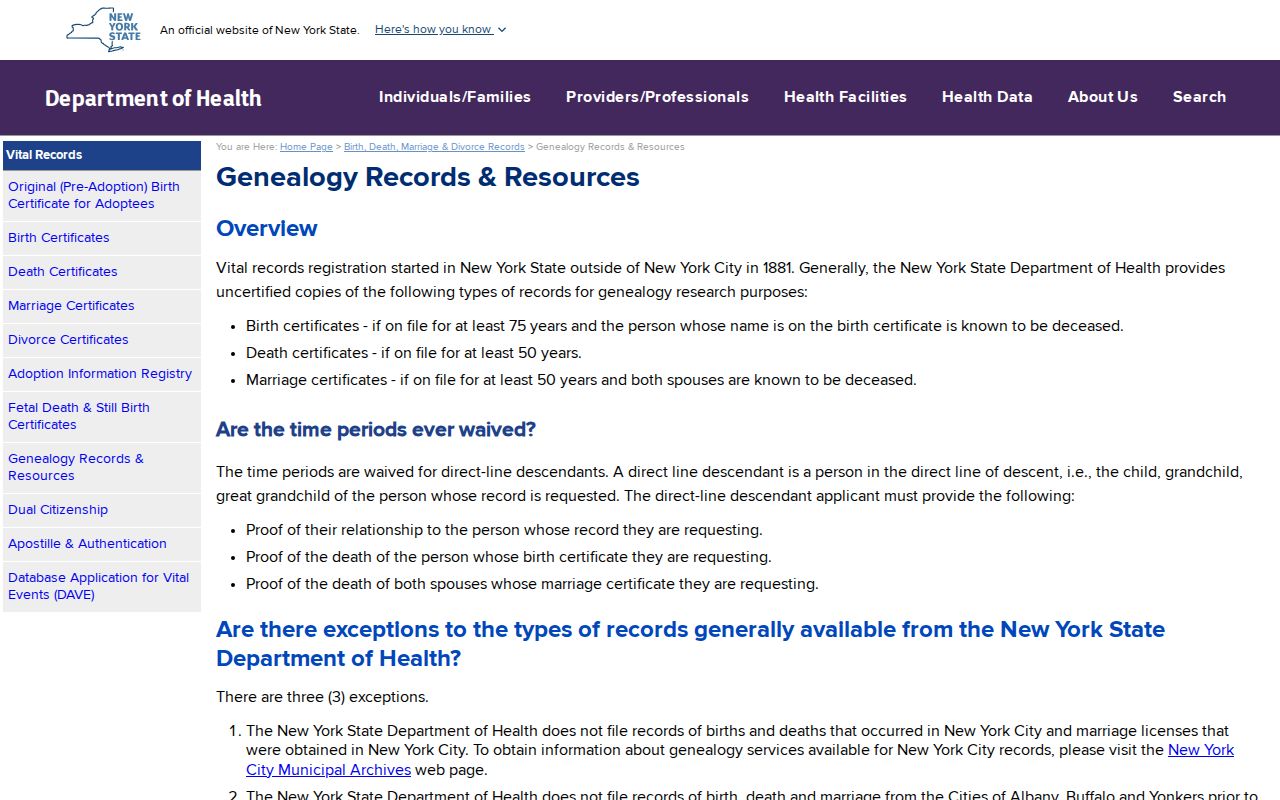
Give the Genealogy Unit the event type, name, date or range, place, relatives where requested, applicant eligibility, and required proof rather than sending unnecessary personal details.
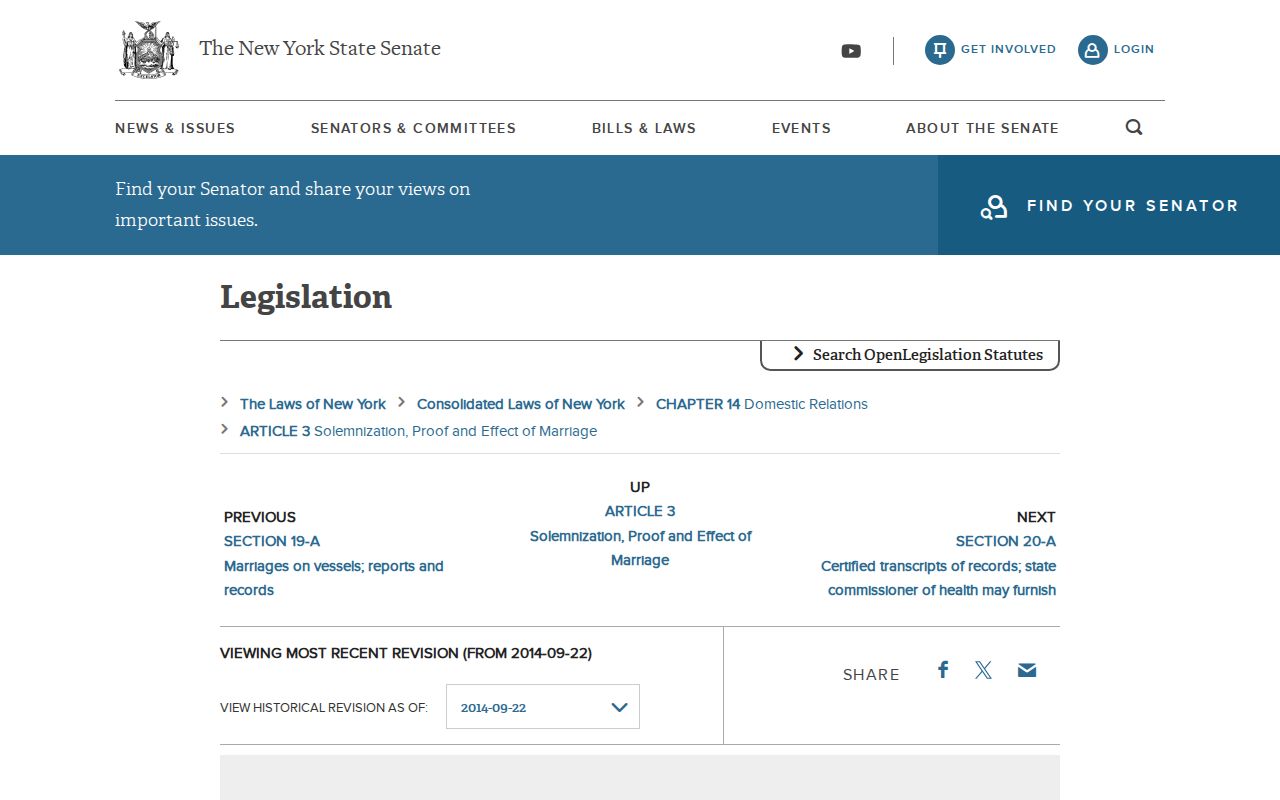
For marriage-record authority, the New York Domestic Relations Law §20 provides statutory context alongside the operational DOH instructions.
For a Lockport event, the City Clerk is a concrete local registrar route; events elsewhere in the county belong to their own municipal registrar.
Historical Leads for Niagara County Residents
Older identity work often begins in a repository, not a live government search. Lockport Public Library lists city directories, local newspapers, yearbooks, census microfilm, an obituary index, and local-history-room service. Lewiston Public Library’s local-history room holds histories, maps, newspapers, archives, a People of Lewiston database through the 1940 census era, and obituary resources that begin in various years from 1854. Lookup requests work best with a complete name, date, location, and the collection or year requested.
The County Historian also lists obituaries from roughly the 1840s, marriages from 1908, census material from 1850, and city directories from 1856. Those dates describe collection leads, not an uninterrupted run. A historical directory is a dated snapshot and should not be read as proof of a current address. When an older name leads to a particular street, the Niagara County street directory supplies the separate current address-record workflow.
Separate Niagara County Custody Systems
Custody and registry sources have different meanings and refresh cycles. The Sheriff’s incarcerated-person page is the county jail route, the Department of Corrections and Community Supervision search is the state-custody route, and the Division of Criminal Justice Services directory is the public sex-offender-registry route. None is a complete criminal-history record, and a booking entry is not a court disposition. Avoid copying live result details into a static note.
The DCJS public directory explains the official registry search route.
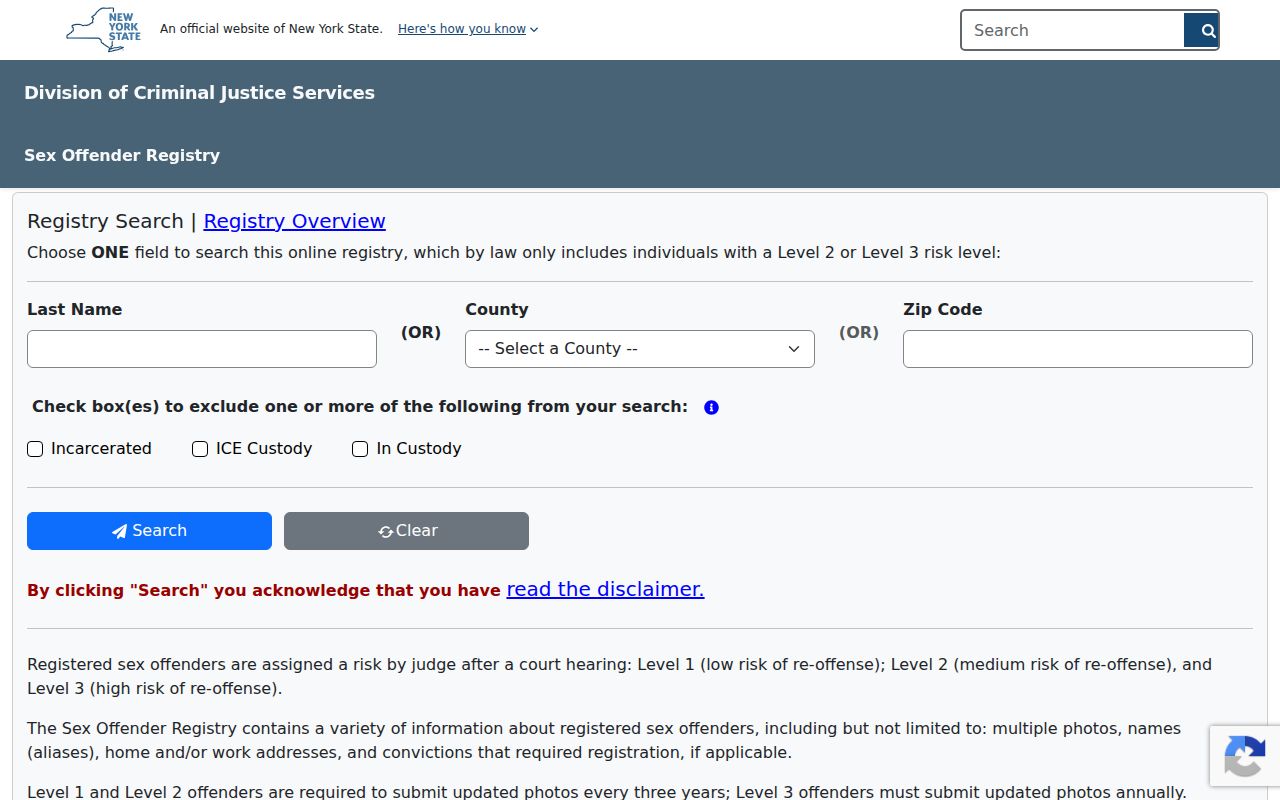
Its online directory has legal exclusions and should be read with the agency’s current notices.
The Niagara County Sheriff incarcerated search is the local jail source.
A jail result is a changing custody snapshot, so verify it with the jail and do not treat it as a finding of guilt.
The DOCCS incarcerated-person lookup uses its own identifiers and update practices.
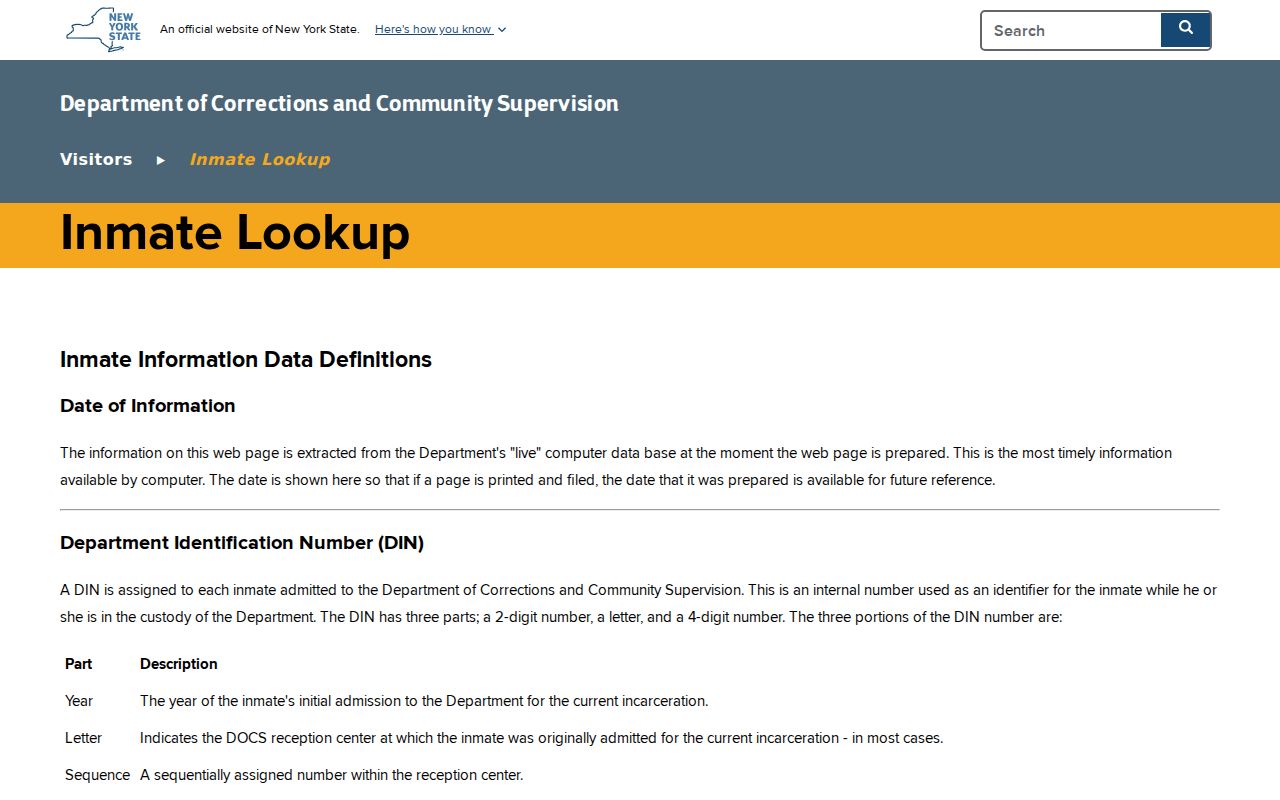
State-custody search is separate from the Sheriff’s local-jail information and carries different inclusion limits.
FOIL for Niagara County Resident Records
New York Freedom of Information Law, Public Officers Law Article 6, §§84 through 90, is a route for existing agency records. It does not require an agency to build a new resident index or resolve a vague name. Name the agency, date range, existing record description, useful fields or file name, preferred electronic format, and a contact for clarification. For a deed or map copy, the County Clerk asks for names, approximate recording date, book and page or instrument number, record type, preferred copy format, and delivery details.
Use the office that actually owns the record. A court clerk handles court files, a municipal registrar handles local events, and the Board of Elections handles election questions. If a record is sealed, confidential, or outside the public scope, a FOIL request does not override that restriction.
Legal Limits on a Niagara County Resident Lookup
New York Safe at Home Address Confidentiality Program participants and confidential voter registrations under Election Law §5-508 require protection. Do not seek to work around a substitute address, sealed court file, protected voter record, or a genealogy waiting period. Correct a wrong court entry through the court, an assessment issue through the relevant assessor, and a vital-record issue through the appropriate registrar or state process. The county’s March 2026 warning about a fake toll-violation summons also offers a practical check: legitimate agencies do not ask for date of birth, Social Security number, or other identifying data in an unsolicited message.
Lawful use. Use a resident lookup for personal, lawful research and family or records questions. Stalking, harassment, intimidation, or harm is prohibited; confirm important information with the responsible custodian.